Introduction: Treat Registration as a Controlled Conference Workflow
Conference registration is not a single form submission—it is a controlled workflow linking submission status, registration category, payment route, discount eligibility, and confirmation evidence. Disconnected form submissions frequently result in unverified discounts and mismatched payment records. I approach this process as a methodology for academic conference attendance rather than a simple promotional registration page.
This guide serves primary users across the board. Authors registering accepted papers, listeners attending without presentation, graduate students, and organizers validating records all rely on this sequence. The operational footprint of DMCIT 2024—conference name recognition alone—demands a flawless administrative backend. We rely on ACPEE 2026 registration timing parameters and DMCIT 2018 historical registration constraints to map out a reliable path.
Step 1: Assemble the Registration Evidence Set
During the study of historical registration constraints, organizers established a strict prerequisite sequence. You must lock your identity, affiliation, and manuscript metadata before accessing any payment gateway. This proven sequence prevents administrative bottlenecks later in the publication cycle.
The minimum input documents required before payment include your acceptance notice, participant identity details, paper or abstract title, and invoice details. If you claim a membership discount, you must provide proof at this stage. Authors must handle full paper and abstract templates in.doc format when required by the conference workflow. You must control specific variables: participant name spelling, affiliation, paper ID, registration category, contact email, payment amount, and the deadline tier. Participant name spelling might seem trivial, but discrepancies between the registration form and the final manuscript metadata cause significant delays during the proceedings compilation phase. The HKSME authority context for fee and routing instructions provides the necessary governance scope for these transactions.
Field Note: Always verify your exact fees and bank details against the active conference edition's official instructions before initiating a transfer.
Step 2: Classify the Participant Before Selecting a Fee
The first decision branch separates author registration from listener registration. The system uses this branching logic to ensure that publication scheduling algorithms only process records with attached, paid manuscripts.
Author registration attaches directly to a specific paper or abstract record. This classification supports publication, presentation scheduling, and attendance verification. Listener registration operates under different access parameters. It supports attendance access without linking payment to a paper presentation obligation. Listener registrations require strict affiliation verification for badge printing but entirely bypass the.doc manuscript validation phase required for authors.
Step 3: Lock the Deadline Tier Before Funds Move
Administrators tied the deadline tier to the timestamp of the completed payment transaction rather than the initial form opening. This prevents attendees from squatting on early-bird rates while delaying actual payment.
We use ACPEE 2026 dates as the active timing model. The early bird registration deadline is December 5, 2025. The regular registration deadline follows on February 10, 2026. The conference rule for completed registration determines the effective registration tier. You must timestamp your registration submission, the payment transaction, the organizer confirmation, and any correction emails.
Step 4: Validate Manuscript or Abstract Files Against the Template Rule
Payment readiness should never separate from file readiness for author registration. We ruled out accepting PDF files for initial manuscript uploads. The mandatory.doc format for full paper and abstract templates allows automated metadata extraction and formatting compliance checks by the proceedings compiler. The automated metadata extraction relies heavily on the structural integrity of the.doc file. If an author submits a PDF, the compiler cannot programmatically verify the title and author order against the registration ledger.
The optimal validation sequence follows a strict order. First, obtain the official template. Second, confirm your category as a full paper or an abstract. Third, prepare the file in.doc format. Finally, verify the title and author order. Keep the submitted version perfectly aligned with your registration details.
Step 5: Verify IEEE and APISE Discount Eligibility Before Quoting the Fee
The validation sequence requires active membership proof upload prior to fee calculation. This eliminates the administrative burden of processing partial refunds for late-claimed discounts. IEEE is a professional member organization whose members may be eligible for discounted conference rates when the registration policy allows it. You can verify your status through the official IEEE membership portal.
APISE operates separately as another member organization associated with discounted rates. This does not imply that all categories automatically qualify. The control check is absolute. The membership name must match the primary registrant identity exactly. The membership must remain active for the relevant registration period, and registrants must retain proof before making the discount payment.
Step 6: Choose a Payment Route and Preserve Transaction Evidence
Organizers integrated Alipay and WeChat as primary digital payment routes. This accommodates the transaction preferences of the regional academic demographic while ensuring instant receipt generation. The payment-routing protocol requires you to confirm your participant category and final fee before selecting the approved route. Submit the payment, capture the transaction proof, and send the required confirmation to the organizer.
You must control the payment variables meticulously. These include the payer name, registrant name, exact amount, currency, transaction reference, and payment date.
Important: A university finance department pays a bulk invoice without specifying paper IDs in the transaction reference, leaving the associated authors marked as unregistered in the proceedings ledger. Always include your paper ID in the transfer notes.
Step 7: Reconcile Payment, Registration Form, and Conference Confirmation
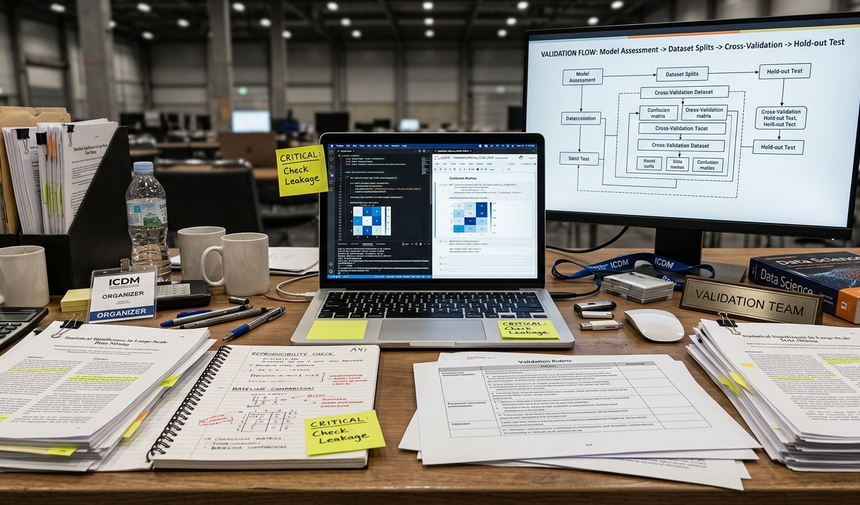
Completion requires a three-part reconciliation: submitted registration details, verified payment, and organizer confirmation. A guaranteed audit trail ensures that no conference badge prints unless the registration form, payment receipt, and organizer confirmation perfectly align. The protocol mandates a two-person review for high-impact ledger modifications, such as paper withdrawals or author name changes, to prevent unilateral data entry errors. Ledger audit fields must capture the registrant name, role, paper or abstract association, affiliation, discount status, payment method, and transaction reference. Exception audit triggers activate upon detecting duplicate payments, missing receipts, or unmatched payer names.
Maintain a single-folder archiving rule per paper or abstract. This folder should contain the registration form, the.doc file, discount evidence, the payment receipt, and the confirmation email. Authors must match the confirmation against the paper title, author name, presentation category, and deadline tier. The DMCIT 2018 historical baseline demonstrates the necessity of a multi-week administrative buffer. The DMCIT 2018 paper registration deadline was April 30, 2018, and the conference dates were May 25-27, 2018, establishing roughly a 25-day buffer for proceedings finalization.
Force majeure boundaries protect the organizing committee's sunk costs in venue and catering deposits. Refund policies strictly exclude reversals for natural disasters or government regulations, shifting the financial risk of travel disruptions entirely to the registrant. Documented refund decisions must match the payment confirmation discipline. While this workflow standardizes administrative execution, it cannot account for localized banking delays in cross-border wire transfers.
Bottom Line: The final operational sequence condenses into an eight-step linear progression, serving as a direct training reference for incoming conference secretariat staff.