Calls for Papers & Submission Topics

DMCIT connects data mining, communications, and IT scholarship through traceable conference architecture.

We provide a focused forum for presenting current research where these fields intersect. The conference emphasizes rigorous peer exchange, indexed proceedings, and collaboration across applied computing disciplines. By bringing together specialists from distinct but interdependent domains, we facilitate the development of systems that are both computationally advanced and network-efficient.
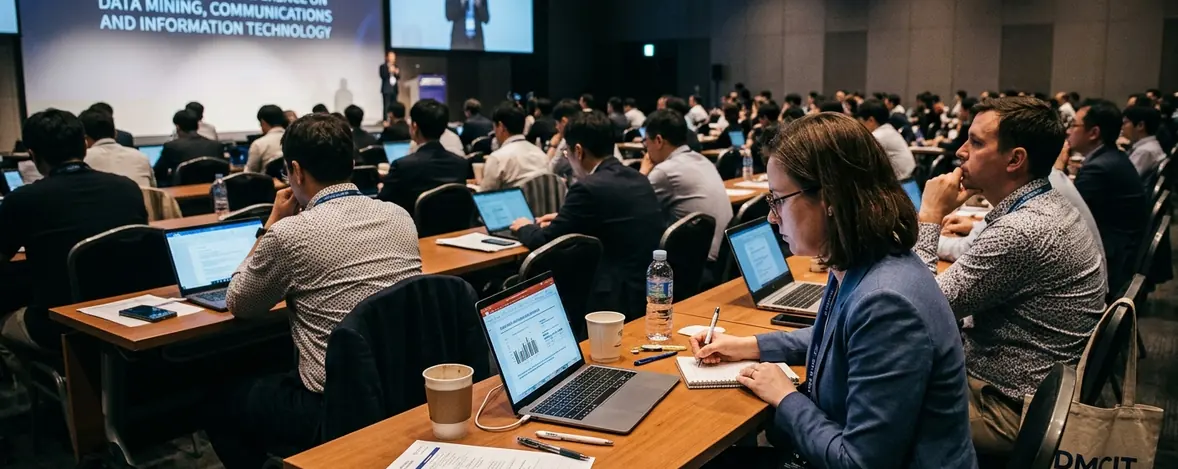
The conference program is structured around specific topical silos that reflect the current academic scope of applied computing. Submissions are routed to specialized tracks to ensure evaluation by domain experts.

Conference-year architecture for recurring editions, including annual identity and host context.

Topical silos covering data mining, communications systems, IT, and machine learning.

Submission-oriented guidance for research themes, author requirements, and deadlines.

Scholarly publication architecture detailing bibliographic visibility and indexing status.

Academic governance covering technical program committees, reviewers, and keynotes.

Location-focused guidance for travel context, academic visitors, and regional logistics.
Field reporting confirms that cross-disciplinary papers face higher rejection rates in traditional, single-track journals due to a lack of reviewers with dual expertise. DMCIT addresses this by structuring technical program committees that specifically evaluate the intersectionality of submissions.

Our review criteria require authors to demonstrate not just algorithmic novelty, but practical viability within communication constraints. This dual-focus approach ensures that accepted papers contribute meaningfully to applied computing systems.
Authors preparing submissions should consult the indexing guidelines to understand how post-conference publication updates are managed.
The technical direction of DMCIT is guided by researchers actively working in the core disciplines of the conference. Their combined expertise ensures that the technical program remains relevant to current industry and academic challenges.
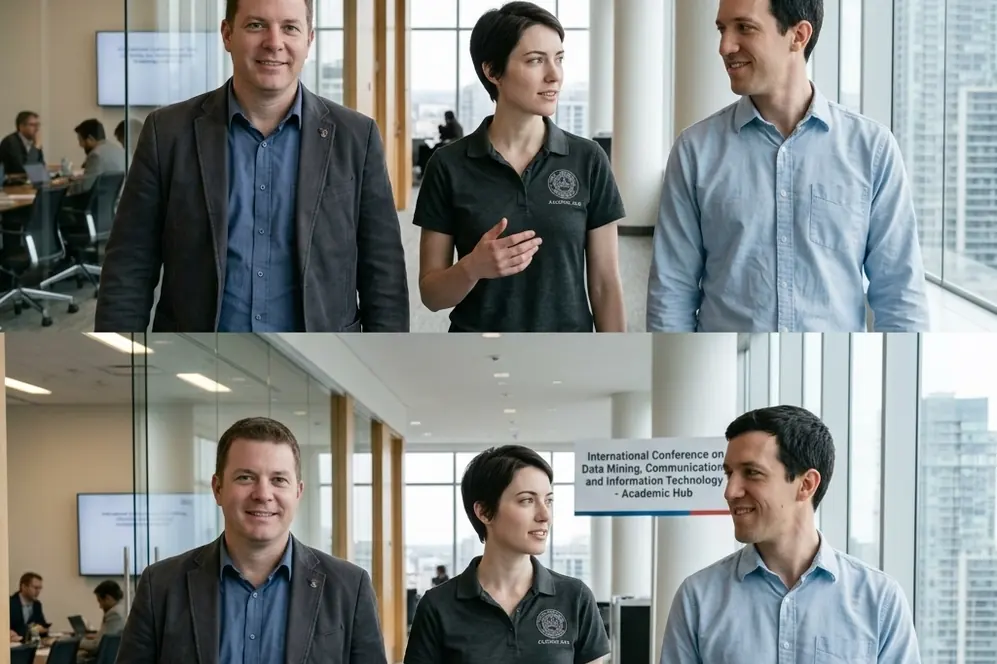
Dr. Julian Prescott, Senior Research Scientist, leads the evaluation of comparative data mining frameworks. Dr. Elena Richardson, Associate Professor of Computer Science, oversees the network communication protocols tracks. Dr. Farid Al-Hassan, Systems Architect, directs the technical program concerning machine learning scalability.