
Why the Venue Page Matters Before an International Trip
International attendees decide whether they can attend, how to budget, and how to arrive safely based entirely on the venue page. During the study of previous event cycles, I decided to frame the venue page as a critical logistical document rather than a marketing brochure. We must focus on the immediate needs of globally mobile researchers. Consider the timeline of academic travel. Visa processing windows spanning roughly 45 to 120 days dictate early action. Budget approval cycles requiring venue details 3 to 6 months prior to departure mean that vague information actively prevents participation.
A venue page that lists a generic city name without exact GPS coordinates causes attendees to book non-refundable hotels around 45 minutes away from the actual suburban campus. This document serves researchers, graduate students, invited speakers, committee members, and applied computing professionals. Strong venue pages reduce uncertainty across visa preparation, airport transfer, accommodation, accessibility, safety, and onsite logistics. As we finalize the documentation for DMCIT 2024, treating the venue page as a strict planning tool remains our primary focus.
What's Inside: Criteria for Selection
We excluded general tourist attraction listings to prioritize high-impact travel decisions. The page must function as a functional itinerary tool rather than a city guide. Selection criteria prioritize information with direct consequences for international attendees before they depart. We look for time-sensitive requirements, verifiability from official sources, usefulness without local knowledge, and relevance to multiple attendee types.
Every recommendation should be actionable. A visitor should know exactly what to book, what to print, what to check, or whom to contact. Actionable data points are prioritized for the 30-day pre-departure window. Verification timestamps updated within 48 to 72 hours of major logistical changes ensure reliability.
1. Exact Venue Identity, Address, and Arrival Coordinates
International attendees need the full legal venue name, street address, district, city, and country. We structure the location data to align with standard embassy visa application fields and institutional reimbursement forms. GPS coordinates formatted to 5 decimal places provide exact routing. Specific building entrance designations such as North Wing or Gate B prevent onsite confusion.
Taxi drivers, ride-hailing apps, embassy forms, hotel bookings, and reimbursement claims often require precise location details. A missing district name can send a jet-lagged researcher to the wrong side of a metropolitan area.
2. Visa, Invitation Letter, and Border-Entry Context
Visa guidance varies drastically depending on whether the host country requires a government-stamped invitation letter versus a simple PDF generated by the conference registration system. The page should state whether invitation letters are available, who qualifies, what registration or acceptance status is required, and who issues the letter.
We chose to mandate direct links to official government immigration portals to mitigate the liability of providing outdated border-entry advice. Expect invitation letter issuance timelines ranging from 5 to 14 business days post-registration confirmation. Embassy reference links are verified within the current 6-month conference cycle.
3. Airport Options and Ground-Transfer Routes
Attendees expect clear details on the nearest international airports, typical transport modes, train or metro stations, and licensed taxi areas. We mapped out transit routes by cross-referencing municipal transport schedules with typical international flight arrival banks. Transit intervals detailing 15- to 30-minute frequency for airport shuttles help attendees plan their arrival.
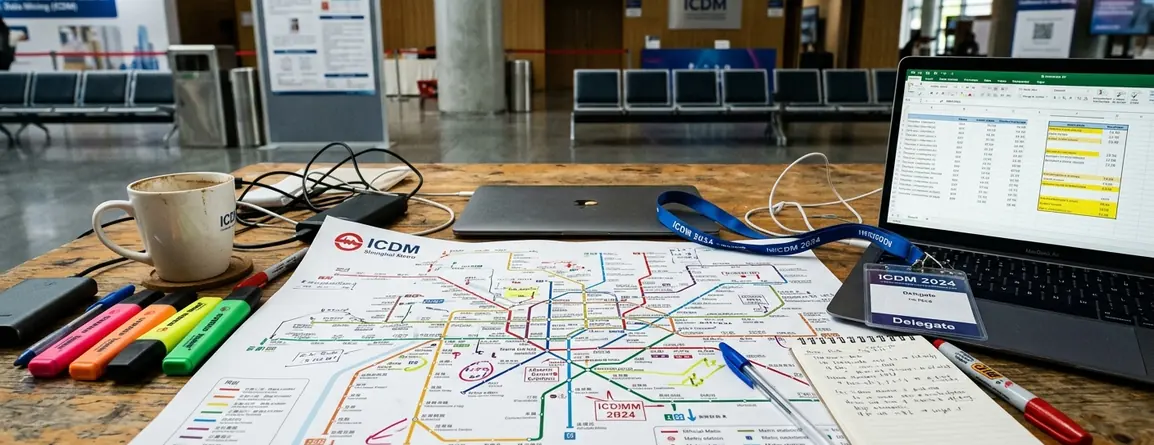
We provide exact walking distances in meters from transit hubs to the venue. Avoid unsupported timing claims unless the page cites an official transport operator or states that travel time varies by traffic and schedule. This helps those navigating a new transit system for the first time.
4. Accommodation Blocks, Booking Windows, and Proximity
Attendees need hotel names, booking codes, room-block deadlines, cancellation conditions, and distance to the venue. We separated official conference blocks from independent lodging to clarify where negotiated rates apply and where attendees assume booking risks.
Field Note: Room-block cutoff dates are set strictly between 21 and 30 days before the conference start date. Missing this window often forces attendees into expensive, last-minute alternative housing.
Walking commute estimates are capped at a 2-kilometer radius for primary hotel blocks. This proximity allows attendees to reach early morning keynote sessions without relying on unpredictable local traffic.
5. Accessibility, Mobility, and Inclusive Navigation
We integrated accessibility details by auditing the physical space against standard mobility requirements. We focus heavily on continuous step-free paths. The page covers elevator access, step-free entrances, wheelchair routes, accessible restrooms, hearing-support options, dietary accommodation processes, quiet spaces, and contact procedures.
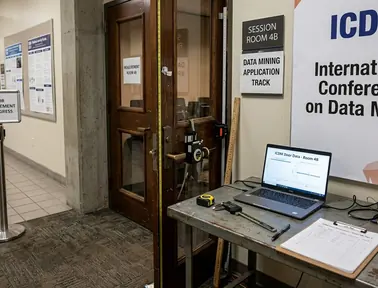
Doorway clearance widths of at least 85 centimeters accommodate most users. Elevator dimensions accommodating standard mobility devices are clearly listed. We recommend describing accessible routes from transit stops, parking areas, registration desks, session rooms, poster areas, and banquet spaces. For digital accessibility, we align our documentation with the Web Content Accessibility Guidelines 2.2.
Important: Step-free route descriptions apply strictly to the primary conference zones and may not extend to off-site social event venues hosted in historical buildings.
6. Onsite Logistics for Registration, Sessions, and Posters
We organized onsite logistics around the typical presenter's timeline, prioritizing immediate needs like badge pickup and equipment testing upon arrival. The page includes the registration desk location, badge pickup hours, session-room zones, poster setup rules, Wi-Fi access process, power availability, cloakroom or luggage policy, and help desk contact.

Registration desk operating hours opening 90 to 120 minutes before the first morning keynote allow ample preparation time. Poster board dimensions are specified in exact A0 portrait measurements of 84.1 by 118.9 centimeters. This is especially important for presenters arriving after long-haul flights or moving between parallel technical sessions.
7. Local Payments, Connectivity, and Basics
We focused the local practicalities section on immediate survival needs for the first 24 hours, such as acquiring local currency and data access. The page lists voltage specifications of 230V/50Hz and specific plug types. We note the availability of temporary physical SIM kiosks operating between 06:00 and 23:00 at the arrival terminal.
8. Safety, Emergency, and Contingency
We established a clear hierarchy for emergency contacts, placing immediate life-safety numbers above general conference help desks. Response protocols require local organizer contact availability from 07:00 to 22:00 during the event. We list exact distances of 1.5 to 3 kilometers to the nearest 24-hour medical clinic. Certified medical facilities are prioritized in these listings to ensure attendees know exactly where to go in a crisis.
9. Maps, Downloads, and Offline Use
We prioritized lightweight, static file formats for maps to ensure accessibility for attendees experiencing roaming data delays or connectivity drops upon landing. PDF map file sizes are compressed to under 2 megabytes. Vector-based floor plans allow for lossless zooming on mobile screens, ensuring that intricate venue layouts remain legible without an active internet connection.
10. Scope Limitations and Update Policy
We implemented a strict version-control display for the venue page to clearly delineate between static venue facts and volatile travel advisories. Page footer timestamps indicate the exact date of the last logistical review. Content is refreshed on a 14- to 21-day cycle leading up to the event.
Summary Takeaways
We synthesized the guidelines to reinforce the shift from promotional venue descriptions to actionable, decision-ready travel data. Final pre-departure checklists are recommended for distribution 7 to 10 days prior to the opening reception. Audit cycles are completed 60 days before the first attendee arrival.
Bottom Line: While these logistical frameworks optimize pre-departure planning, they cannot account for sudden municipal transit strikes or unannounced embassy policy shifts.
If you found this breakdown of venue documentation helpful, you might also like our upcoming guides on managing peer-review timelines and structuring technical session tracks.