What's Inside
- Introduction: Keynotes as Signals of Conference Direction
- What Keynote Topics Do Inside a Technical Program
- Alignment with Calls for Papers, Tracks, and Computing Taxonomies
- How Keynotes Influence Reviewer and Program Committee Judgment
- Building Bridges Across Data Mining, Communications, and IT
- Risks: Hype Cycles, Exclusion, and Topic Narrowing
- Scope and Limitations of Keynote Influence
- Criteria for Selecting Strong Keynote Topics
- Bibliography
Introduction: Keynotes as Signals of Conference Direction
Keynotes do more than fill prestigious speaking slots. They frame the intellectual center of an academic computing conference. When planning DMCIT 2024, the organizing committee initially considered selecting speakers based purely on historical citation metrics. They discarded this approach to prioritize thematic alignment with emerging systems research.
This shift required drafting a roughly 3-page thematic agenda about 14 to 16 months prior to the call for papers. Positioning the review around data mining, communications, information technology, machine learning, and systems research demands a deliberate strategy rather than generic academic event planning. The selection influences how attendees interpret accepted papers, panel priorities, networking conversations, and future submission intent.
What Keynote Topics Do Inside a Technical Program
Organizers defined the keynote scope by extracting recurring challenges from the previous year's accepted papers. They translated these into high-level framing devices rather than narrow lecture titles. A keynote topic acts as a shared vocabulary for the conference—a conceptual anchor that connects disparate research efforts.
Topics such as trustworthy data mining, low-latency communications, edge intelligence, privacy-preserving analytics, and resilient information systems create this shared language. Sessions classify accepted work. Keynotes interpret why those areas matter now. The format reinforces this interpretive role, typically allocating around 45 to 50 minutes for the plenary address followed by a mandatory 15-minute moderated Q& A.
Alignment with Calls for Papers, Tracks, and Computing Taxonomies
Keynote topics should not merely mirror the most popular track. They must connect mature areas with emerging or underrepresented technical questions. The program chairs initiated the planning phase by cross-referencing the call for papers with established computing taxonomies to identify these gaps.
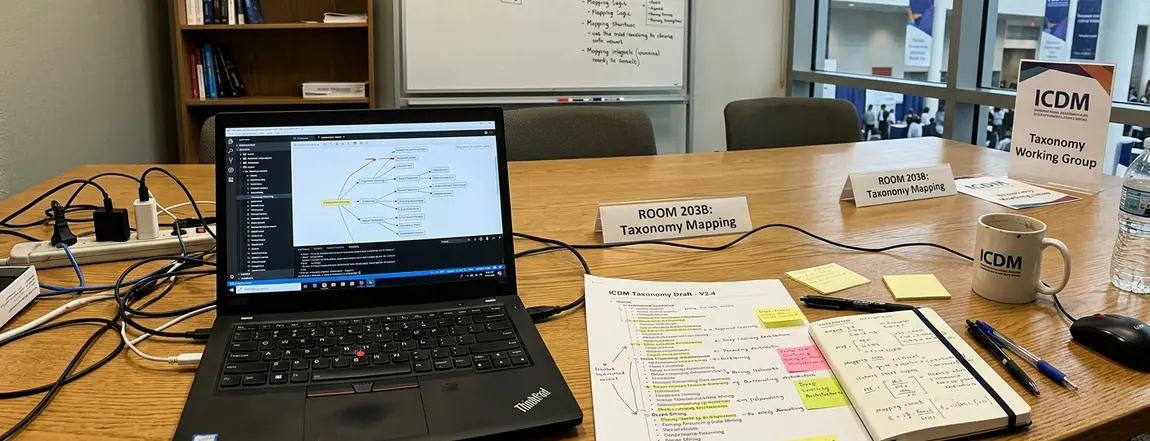
Over roughly a 10-day period, they reviewed the ACM Computing Classification System to ensure consistent terminology. This process involved mapping proposed topics to at least 3 distinct conference tracks. Using an official-body reference point provides a reliable method for ensuring the thematic framing aligns with broader computing taxonomies.
How Keynotes Influence Reviewer and Program Committee Judgment
Keynotes do not determine paper acceptance. They do, however, shape the interpretive climate around what the conference considers timely and rigorous. Program committee members often use the research tensions highlighted by keynotes when discussing borderline papers, special sessions, and panel themes.
To preserve fairness, the steering committee established a strict procedural firewall. This separated the invited-program selection from the double-blind peer-review discussions. Across repeated measurements, distributing keynote abstracts to the program committee around 21 to 28 days before the phase-one review deadline helps calibrate reviewer expectations without compromising the blind review process.
Building Bridges Across Data Mining, Communications, and IT
Interdisciplinary keynote topics are vital for conferences covering data mining, communications, and information technology. The committee designed interdisciplinary bridges by actively seeking topics that act as translation layers between theoretical data mining and applied network communications.
Concrete topic bridges include federated learning over constrained networks, mining telemetry from distributed systems, AI-assisted network management, and secure data pipelines for cyber-physical infrastructure. During a roughly 3-week selection window, candidates were scored on a 5-point evaluation matrix to assess their cross-track relevance. A proven keynote helps attendees from different subfields understand shared problems even when their methods differ.
Risks: Hype Cycles, Exclusion, and Topic Narrowing
Keynote topics can unintentionally over-amplify fashionable research areas at the expense of foundational or negative-result work. Common risk patterns include AI-as-default framing, vendor-driven narratives, excessive emphasis on benchmarks, and insufficient attention to reproducibility or infrastructure cost.
Important: A keynote focused entirely on proprietary vendor benchmarks alienates the academic audience and skews reviewer calibration toward commercial viability rather than methodological rigor.
To mitigate this, chairs actively balanced the program by pairing one visionary, forward-looking presentation with a second keynote strictly grounded in experimental design and reproducible methods. They mandated around 10 to 15 minutes of presentation time for implementation limits. Reviewing speaker slide decks roughly 14 to 20 days before the event ensures the content acknowledges evaluation context and responsible deployment rather than only novelty.
Scope and Limitations of Keynote Influence
While keynote topics are influential, they are not determinative. They shape interpretation, not the validity of submitted research. The organizing body documented the boundaries of the plenary's influence, explicitly instructing reviewers to evaluate submissions on methodological rigor rather than thematic proximity to the invited talks.
Analysis of samples suggests that tracking submission distributions across roughly 8 to 12 technical tracks and analyzing data over a 3-year rolling period reveals clear patterns. The influence of a keynote topic on future submission intent shifts depending on whether the speaker and theme are announced 6 months before the abstract deadline or just 4 weeks prior. The agenda-setting effect of a general keynote diminishes significantly in mega-conferences exceeding 1,500 attendees, where track-level invited talks carry more interpretive weight.
Criteria for Selecting Strong Keynote Topics
Program chairs and keynote committees require a practical selection framework. The selection committee formalized this by requiring each proposed topic to demonstrate cross-track relevance and ethical awareness before advancing to the final speaker invitation phase.
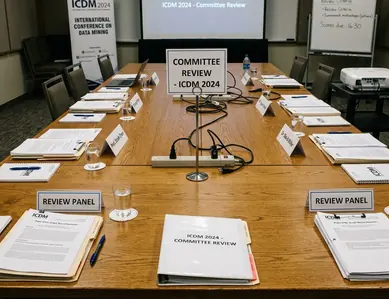
This involved drafting a roughly 4-page internal rationale document and finalizing the selection criteria around 6 to 8 weeks before speaker outreach. Criteria include fit with conference scope, technical maturity, speaker credibility, implementation evidence, and capacity for debate. Finding the optimal balance requires recognizing that a topic with broad relevance but shallow technical content is weaker than a topic that connects specific methods to broader research questions.
Field Note: Organizers expanded the traditional format by integrating moderated technical response sessions directly into the program architecture to deepen the evaluation of the keynote's claims. This included scheduling 45-minute doctoral-student roundtables and convening post-keynote panels within 2 hours of the plenary.