Introduction: Why Technical Program Committee Roles Matter
International conferences run on distributed academic labor. That labor can be generous, expert, and fast; it can also become muddled when first-time committee members cannot tell where reviewing ends and editorial judgment begins.
For computing-oriented venues such as DMCIT 2024, the technical program committee is not just a list of names on a website. It is the structure that turns submissions, reviews, conflicts, rebuttals, and track priorities into a defensible research program. In data mining, communications, information technology, machine learning, and systems research, that structure matters because papers often mix theory, implementation, empirical evaluation, and domain claims in one package.
Committee formation commonly begins roughly 9-12 months before the conference dates. The initial recruitment usually targets three or four distinct hierarchical roles rather than one broad reviewer pool. That separation is practical: organizers can document strategic, editorial, and administrative duties before the submission rush starts.
What's Inside
- How general chairs, program chairs, track chairs, area chairs, reviewers, and publication roles fit together.
- Where program chairs exercise editorial judgment rather than merely counting scores.
- How reviewer duties should stay technical, evidence-based, and proportionate.
- What happens when conflicts, confidentiality, and cross-border norms collide.
- Where the technical program committee’s authority ends.
The Committee Architecture: From General Chairs to Reviewers
Reporting lines and practical ownership
A conference committee has two centers of gravity. The general chair usually owns overall conference execution: budget coordination, venue planning, sponsor alignment, high-level timelines, and steering communication. The program chair owns the scholarly quality and integrity of the technical program.
Those responsibilities overlap, but they should not blur. A general chair may ask whether the program schedule fits the venue. A program chair asks whether an accepted paper earned its place through coherent review and appropriate scope fit.
The usual architecture runs from general chair to program chair or technical program co-chairs, then to track chairs, area chairs or senior program committee members, and reviewers. Publication chairs, publicity chairs, and local organizing roles sit alongside this chain, handling proceedings production, audience reach, registration logistics, and on-site execution.
Why co-chairs are not decorative
International conferences often appoint co-chairs to balance regions, time zones, disciplinary subfields, and institutional networks. A practical example: general chairs may map candidate affiliations against target submission regions before confirming co-chair appointments. That prevents every virtual decision meeting from favoring one continent’s working day.
Some programs schedule coordination calls across several distinct global time zones. Area chair coverage also needs planning; a target ratio of roughly one area chair per 12-15 reviewers gives chairs enough oversight without turning meta-review into clerical triage.
Program Chair Responsibilities: Scope, Standards, and Final Judgment
The editorial lead, not the scorekeeper
The program chair sets the editorial frame: submission scope, reviewer assignment policy, acceptance criteria, timeline discipline, and program balance. In a conference such as DMCIT 2024, that means distinguishing a strong data mining implementation paper from a general software report that lacks research contribution.
Program chairs coordinate track formation, committee recruitment, review form design, rebuttal handling, session grouping, and award nomination workflows. They also decide how much variance the program can tolerate across tracks. A communications systems track with heavy experimental infrastructure may not look like a machine learning methods track, yet both need comparable standards of evidence.
Scores help, but they do not decide. Program chairs calibrate acceptance thresholds by comparing meta-review score distributions with track capacity, then adjust cutoffs to maintain program balance across subfields. Final program assembly often finishes around 6-8 weeks before the event, which leaves little room for late philosophical debates about scope.
Bottom Line: A program chair should interpret review quality, conflicting expertise, novelty claims, and conference fit. Aggregating numbers is administration; defending a technical program is editorial work.
Rebuttal handling
Where rebuttals exist, a response window of about 5-7 days is common. The chair’s task is not to let authors rewrite the paper during rebuttal. It is to let them correct misunderstandings, clarify experimental design, and answer material reviewer questions before discussion closes.
Track Chairs, Area Chairs, and Senior Reviewers
Domain leadership and review synthesis
Track chairs lead domains: data mining algorithms, communications systems, information technology applications, machine learning methods, security, distributed computing, or another defined area. They translate the conference scope into disciplinary expectations.
Area chairs operate closer to the papers. They assign manuscripts to suitable reviewers, read reviews for coherence, start discussion, identify weak or superficial reviews, and prepare meta-reviews. An area chair handling 18-22 papers needs both subject knowledge and time discipline.
Senior reviewers versus regular reviewers
Regular reviewers evaluate assigned papers. Senior reviewers may synthesize recommendations, mentor newer reviewers, or flag methodological concerns that a less experienced reviewer has missed. The distinction matters most when the review set conflicts.
Consider a paper with three reviews: one enthusiastic but vague, one skeptical about baselines, and one detailed critique of the evaluation protocol. A careful area chair weighs the methodological critique more heavily than a superficial score. Meta-reviews generally need a minimum of three distinct reviewer inputs, but the number alone does not create judgment.
Reviewer Duties: Technical Evaluation Without Overreach
What reviewers are actually asked to do
A reviewer evaluates originality, technical soundness, empirical evidence, clarity, reproducibility signals, ethical concerns, and relevance to the assigned track. A typical rubric contains around five distinct technical criteria, but the written review carries the real value.
Strong reviews usually include a concise summary, major strengths, major weaknesses, actionable questions, a confidence level, and a recommendation tied to evidence rather than preference. An expected review length of roughly 300-400 words of substantive technical critique gives enough room to be specific without writing a second paper.
I look first at whether the reviewer tested the paper’s claims against its own evidence. If the abstract promises broad superiority, the datasets, baselines, ablation choices, and reproducibility signals need to support that claim. If the conclusion narrows the contribution, the review should acknowledge that narrower contribution instead of punishing the paper for not solving a different problem.
Important: Reviewers should not demand citation of their own unrelated work, reject outside their expertise without saying so, reveal identity in double-anonymous review, or judge authors by institution. I have seen the first problem require meta-reviewer intervention because it turned a technical critique into a citation negotiation.
Ethical orientation
Peer review also has a conduct dimension. The COPE Ethical Guidelines for Peer Reviewers provide a useful reference point for confidentiality, conflicts, and reviewer behavior, especially when committees draw members from many academic systems.
Workflow: From Submission Assignment to Accepted Program
The operating sequence
- Submission check.
- Scope screening.
- Conflict declaration.
- Reviewer bidding or automated matching.
- Review assignment.
- Review completion.
- Author response, where applicable.
- Committee discussion.
- Meta-review preparation.
- Decision meeting.
- Notification.
- Camera-ready checks.
- Session scheduling.
The workflow often advances from bidding to assignment through an automated matching algorithm. Track chairs then manually adjust the results to resolve expertise gaps. A reviewer bidding window of about 48-72 hours keeps the process moving, while a maximum assignment of 4-6 papers per regular reviewer reduces the chance of thin reviews.
Where disagreements belong
Disagreement is not a process defect. A technically strong paper may fall outside the stated conference scope. A risky paper may contain a novel idea but weak evidence. A clean implementation paper may offer limited research novelty.
Decision categories should stay consistent across tracks. Borderline discussion should remain separate from award discussion. Chairs should preserve an audit trail in the submission system so later questions can be answered from recorded decisions, not memory.
Conflicts, Ethics, and Confidentiality Across Borders
One operational standard
International committees need explicit conflict rules because academic norms vary by region. Institutional conflict of interest can mean current affiliation in one system, recent affiliation in another, and a broader laboratory or funding relationship elsewhere. The conference has to define one operational standard before review begins.
Common conflict categories include co-authorship history, shared grants, institutional affiliation, supervisory relationships, close collaboration, personal relationships, and competitive conflicts. A mandatory look-back period covering co-authorship within roughly the past three to four years gives chairs a concrete boundary, though some relationships require judgment beyond the date range.
Confidentiality is procedural, not ceremonial
Reviewers should not share manuscripts, use unpublished findings, upload papers to uncontrolled tools, or discuss decisions outside authorized systems. System logs that track manuscript access timestamps help audit confidentiality when questions arise.
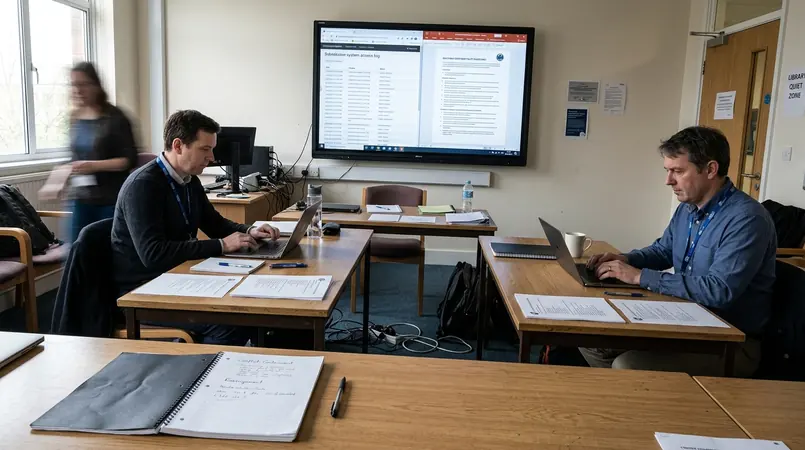
Late-discovered conflicts need quick containment. Chairs can reassign the manuscript to an alternate area chair and quarantine the original reviewer’s access in the submission system. That action protects the authors, the reviewer, and the committee record.
Scope and Limitations: What a TPC Can and Cannot Decide
Editorial authority has boundaries
A technical program committee is not usually the legal owner of the conference, the publisher, or the sponsoring society. It may recommend acceptance, shape sessions, and maintain review standards. It does not normally control venue contracts, visa policies, indexing decisions, copyright terms, or sponsor compliance rules.
This boundary frustrates some reviewers. A reviewer may find a serious publication concern and expect the TPC to settle every consequence. In practice, suspected misconduct, plagiarism, duplicate submission, sanctions concerns, or legal questions should move from reviewers to chairs, then to steering, publication, or sponsoring bodies as appropriate.
Automated similarity checks may flag text overlap exceeding roughly 15-20% excluding references. When that happens, the flagged manuscript should move from the standard review track into a dedicated administrative queue for steering committee evaluation, with escalation reports generated within about two days of detection.
Field Note: TPC recommendations regarding paper acceptance are strictly editorial; final inclusion in the proceedings remains contingent upon authors meeting registration deadlines and copyright transfer requirements set by the sponsoring society.
Best Practices for New and Returning Members
Habits that reduce committee friction
- Declare conflicts early, even when uncertain.
- Write reviews that quote or paraphrase the paper’s actual claim before criticizing it.
- Use confidence scores honestly; low confidence is information, not embarrassment.
- Separate novelty, correctness, presentation, and relevance instead of collapsing them into one impression.
- Escalate ethical concerns through the chair chain rather than discussing them informally.
Chairs can help by maintaining a reserve list of senior reviewers who have agreed in advance to take late assignments. A reserve pool equal to roughly 10-12% of the total reviewer count gives the program room to absorb withdrawals, conflicts, and missing reviews. A deadline buffer of about a week to ten days before the decision meeting keeps emergency reviews from becoming rushed endorsements.
Summary and Takeaways
A technical program committee works when roles create layered verification. At least four distinct roles may interact with an accepted manuscript: reviewer, area chair, track chair, and program chair. The total review cycle often spans around 12-14 weeks from submission deadline to notification, and each handoff should add judgment rather than noise.
The best committees do not pretend that review is mechanical. They design for disagreement, document conflicts, protect confidentiality, and give chairs enough authority to interpret evidence. For TPC governance, policy sources guide conduct more than they settle every local legal question, so escalation paths matter.
Bottom Line: Clear committee roles protect authors, reviewers, chairs, and the conference record. They also make the final program easier to defend when a hard decision is questioned months later.