What's Inside
- Introduction: Why Shanghai Fits Computing and Engineering Events
- Venue Infrastructure for Technical Programs
- Research Ecosystem and Academic Positioning
- International Access, Visas, and Delegate Mobility
- Program Design for Computing and Engineering Audiences
- Attendee Experience Beyond the Session Room
- Scope, Limitations, and Risk Controls for Shanghai Planning
- Decision Framework: When Shanghai Is the Right Host City
- Bibliography
Introduction: Why Shanghai Fits Computing and Engineering Events
Selecting a host city for an international academic conference requires balancing technical infrastructure with delegate accessibility. The organizing committee evaluated host cities by mapping historical attendee origin data against direct flight availability, prioritizing locations that minimized transit friction for the largest blocks of active researchers. Shanghai consistently emerges as a high-capacity destination for events focused on data mining, communications, information technology, and machine learning.
This guide serves conference chairs, program committee members, and applied computing professionals evaluating Shanghai for upcoming events like DMCIT 2024. It bypasses tourism overviews to assess the city strictly through a conference-operations lens. We look at venue suitability, author travel logistics, program design, technical session requirements, and risk controls.
Securing a footprint in this city requires long-term planning. A minimum 500-seat plenary capacity requirement typically dictates a 14 to 18 months advance booking window for major municipal venues. Organizers must lock in these foundational elements before issuing the first call for papers.
Venue Infrastructure for Technical Programs
Computing and engineering conferences demand specific physical environments. A large ballroom is insufficient for a program heavy on code demonstrations, hardware setups, and dense poster sessions. Planners selected purpose-built convention centers over university lecture halls to ensure dedicated, uninterrupted access to multi-track rooms, ruling out campus venues because their availability often conflicts with active academic terms.
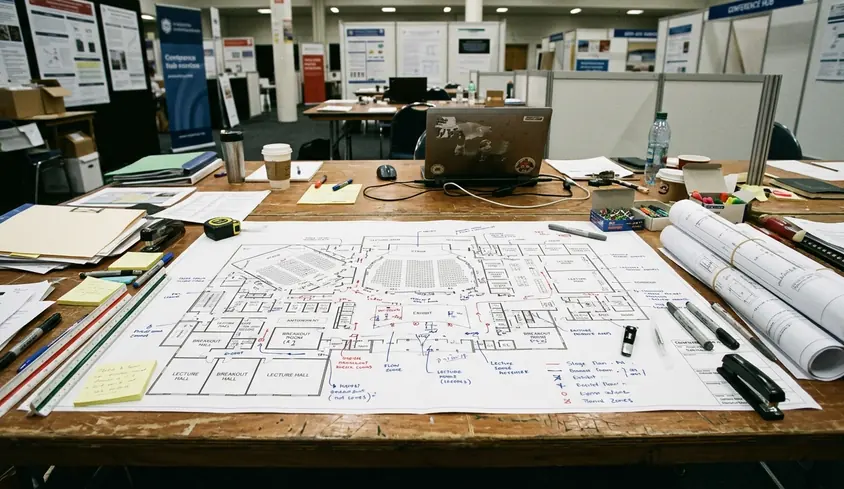
Venue selection criteria shifting from large convention centers to clustered hotel meeting rooms depending on the ratio of plenary to parallel sessions is a common operational pivot. If your program features a single massive keynote followed by dozens of small workshops, a convention center provides the necessary scale. If the event relies on medium-sized, highly interactive tracks, clustered hotel facilities often offer better acoustic isolation and closer proximity to delegate lodging.
Field Note: Hardware and systems-oriented presentations require robust power distribution. Specify a minimum 2 dedicated 20-amp circuits per technical demo station in your venue contract. Additionally, map the physical distance between parallel session rooms to guarantee a 3 to 5 minutes transition time, preventing schedule drift.
Research Ecosystem and Academic Positioning
Shanghai maintains a dense concentration of universities, laboratories, and technology firms. This proximity to active applied research communities provides a structural advantage for conference organizers seeking local engagement.
The city offers proximity to at least three major research universities within roughly a 15-kilometer radius of the primary conference districts. Institutions such as Shanghai Jiao Tong University, Fudan University, Tongji University, and East China Normal University anchor the local academic landscape. Mentioning these institutions provides context for the city's research density, though it does not imply their endorsement or formal partnership with any specific event.
The program chairs structured the industry panel by cross-referencing local applied research laboratories with the conference's core tracks, ensuring invited speakers had active, verifiable publication records in the relevant domains. When sourcing these local experts, organizers should anticipate a 6 to 8 weeks lead time for securing local keynote commitments.
International Access, Visas, and Delegate Mobility
International academic travel requires predictable logistics. Shanghai supports global delegate mobility through extensive airport access, high-speed rail connections, and a comprehensive metro system. The city maintains a 45-minute maximum transit time from international airports to the primary conference districts, reducing arrival friction for authors and reviewers.
Visa acquisition remains a critical path item for international delegates. The logistics team established a dedicated visa support desk, generating standardized invitation letters based on the specific entry requirements published by the municipal foreign affairs office. Organizers must communicate a 90 to 120 days lead time for visa application processing to all accepted authors.
Maintain a dedicated travel guidance workflow. Provide clear instructions for first-time visitors, emergency contact routing, and links to official Shanghai visitor and city service information to help delegates navigate institutional approval timelines and travel documentation.
Program Design for Computing and Engineering Audiences
Experimental data indicates that physical layout directly impacts session attendance and audience engagement. Session chairs allocated presentation slots by grouping accepted papers into thematic clusters, assigning larger rooms to topics with historically higher attendance based on previous conference cycles.
Structuring a technical program in a large venue requires strict time management. Standardize the schedule with 15-minute presentation slots followed by 5 minutes for Q& A. Keep poster and demo areas visible and integrated into high-traffic zones rather than isolating them in distant halls. Ensure a minimum 2.5-meter clearance between poster boards for attendee traffic flow, allowing researchers to gather and discuss methodologies without blocking aisles.
Hybrid formats and session recording introduce distinct challenges. Livestreaming requires explicit speaker consent and robust network stability. Always establish fallback presentation options for accepted authors who face unexpected travel disruptions.
Attendee Experience Beyond the Session Room
Informal technical discussions, doctoral visibility, and collaboration formation frequently occur outside formal sessions. The local arrangements committee designed the social program by surveying past attendees, prioritizing structured networking events over generic sightseeing tours to maximize academic collaboration opportunities.
Keep optional activities academically relevant. Lab visits, industry panels, and small research-group meetings provide tangible value for senior researchers and applied computing professionals. Schedule a 2-hour welcome reception window to facilitate initial introductions before the technical tracks begin.
Bottom Line: Delegate fatigue degrades program engagement. Enforce a maximum 800-meter walking distance between the main venue and recommended delegate hotels to ensure attendees can easily navigate between sessions, networking events, and their accommodations.
Scope, Limitations, and Risk Controls for Shanghai Planning
Conference governance requires anticipating points of failure. The steering committee developed a risk mitigation matrix by auditing past event disruption logs, establishing clear escalation paths for network failures and last-minute speaker cancellations. Financial planning also requires safeguards, such as maintaining a minimum 10% contingency buffer in the catering budget to accommodate fluctuating registration numbers.
One catch: relying on cloud-based presentation software introduces severe disruption risks if the venue's external network routing experiences unexpected throttling during the event. I have observed the failure to secure secondary local network routing for cloud-based demos resulting in stalled presentations and compromised technical sessions. To mitigate this, mandate that secondary backup presentation files are collected 14 to 21 days prior to the event and stored on local, offline machines.
Important: While these operational guidelines reflect standard practices for large-scale computing events, local municipal regulations and venue-specific network topologies change frequently, requiring independent verification for each conference cycle. This article serves as a planning guide, not legal, immigration, or procurement advice.
Decision Framework: When Shanghai Is the Right Host City
The executive board finalized the host city selection by scoring candidate locations against a weighted matrix of venue readiness, local academic support, and international accessibility metrics. Shanghai proves optimal for events requiring a globally recognizable academic setting, multi-track programs, and access to an applied engineering ecosystem.
A venue must meet a minimum threshold of 4 parallel session rooms to support a standard computing conference architecture. If your event consists of a small closed workshop, operates on a highly constrained budget, or lacks local operational support, a smaller municipality or dedicated academic campus may be preferable.
Because of the scale of municipal venues, a final go/no-go decision is required 12 to 15 months before the proposed conference dates. Evaluate your academic fit, publication workflow, and risk controls against this timeline before committing to the host city.